
CBD Oil with Curcumin and Piperine – Effects, Usage and Dosage
David ReichUpdated:Key points at a glance:
CBD oil with curcumin and piperine is often used by people who are interested in supporting the body in relation to inflammation and oxidative stress. Curcumin is known for its antioxidant properties and its potential role in modulating inflammatory processes. Piperine may increase the absorption of curcumin. The evidence on combining curcumin and piperine with CBD is still limited.
Such products are typically taken sublingually or orally, ideally together with a small amount of fat. It is generally recommended to start with a low amount and increase slowly if needed. Common reference ranges discussed in the literature are 500 to 1000 mg curcuminoids and 5 to 20 mg piperine per day. Pay attention to standardisation and certificates of analysis (COA), and be aware of possible interactions with other substances or medicines. The THC content in these products is usually very low.
Many people are interested in CBD oil. In combination with curcumin (turmeric extract) and piperine, its profile may differ. What does the research say – and what should you keep in mind?
Curcumin (turmeric extract): what it is and what studies suggest
Curcumin is a natural pigment derived from the turmeric root (Curcuma longa). The main constituents are curcuminoids. Preclinical and clinical investigations have described anti-inflammatory and antioxidant effects – among other things via modulation of NF‑κB, COX‑2 and other signalling pathways, as well as activation of the cell‑protective Nrf2 axis (1)(2). Effects can vary depending on dose, formulation and study population; overall, the clinical evidence requires careful interpretation.
Piperine (black pepper extract): bioavailability and potential effects
Piperine is the pungent alkaloid found in black pepper. It is regarded as a bioenhancer because it can inhibit drug‑metabolising enzymes and transporters (e.g. CYP3A4 and P‑glycoprotein). As a result, the absorption of certain substances can increase – including curcumin (3). Preliminary data point towards possible effects on neurotransmitter balance; however, the clinical relevance in humans remains unclear.
Regarding bioavailability: in one human study, the addition of 20 mg piperine was associated with roughly 20‑fold higher curcumin bioavailability (≈2000%); results, however, depend on dose and preparation (4). Modern formulations (e.g. micellar, phytosomal or liposomal systems) can also substantially increase uptake (5).
CBD + curcumin: possible synergies and current state of evidence
CBD (cannabidiol) and curcumin are both being explored in relation to antioxidant and anti‑inflammatory properties. Plausible, but so far mainly hypothesis‑generating, synergies could arise from:
- additive modulation of pro‑inflammatory signalling pathways (e.g. NF‑κB) (1),
- combined antioxidant mechanisms (Nrf2 activation, radical‑scavenging properties) (2),
- possible bioavailability‑related effects through piperine (4)(3).
Regarding the evidence: for curcumin, randomised controlled trials (RCTs) and meta‑analyses exist – particularly as an add‑on in ulcerative colitis (6). For CBD and cannabinoids in inflammatory bowel disease, the evidence is limited and heterogeneous; in studies, changes are more often described for symptoms than for inflammatory markers (7). For the direct combination of CBD + curcumin, there are currently very few controlled human studies.
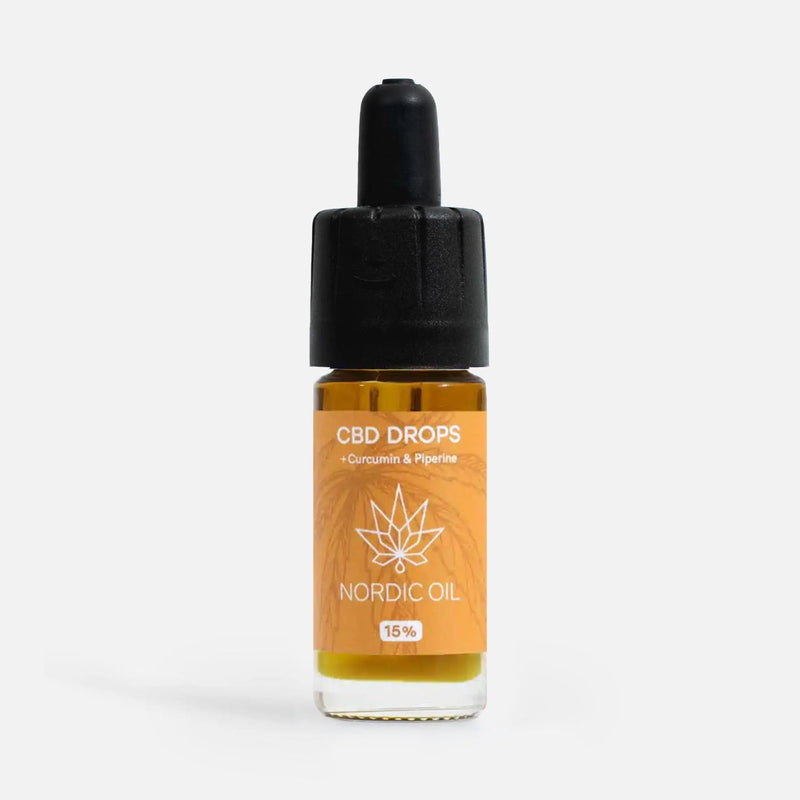
CBD Oil (15%) with Curcumin
CBD, curcumin and piperine may complement each other. Early studies indicate potential, but the evidence for the combination is limited. Keep expectations realistic and pay attention to your individual response.
What is curcumin being researched for?
- Knee osteoarthritis: several meta‑analyses report improvements in pain and function compared with placebo; the quality of the evidence varies (8)(9).
- Digestion: for turmeric preparations there are authorised traditional herbal medicinal products for functional digestive complaints; the claimed effects are based on traditional use. RCTs show, among other things, symptom relief comparable to omeprazole in functional dyspepsia (10)(11).
- Liver health (e.g. NAFLD): meta‑analyses suggest moderate improvements in ALT/AST; studies are heterogeneous (12).
- Obesity/metabolism: umbrella reviews and meta‑analyses report small but statistically significant effects on BMI, body weight and waist circumference; clinical relevance and quality of evidence are limited (13).
- Lipid profile: recent meta‑analyses find small improvements in LDL‑C, TG and HDL‑C; due to heterogeneity and methodological limitations, conclusions should be drawn cautiously (14).
Note: statements refer to the study situation; individual responses vary and this information does not replace medical advice.
Safety, side effects and interactions
Natural active substances can also cause side effects or interact with medicines. With “CBD oil with curcumin and piperine”, particular attention should be paid to potential interactions involving piperine and CBD.
What side effects are possible?
- Gastrointestinal complaints (e.g. feeling full, heartburn, nausea), headaches – more common with high doses of curcumin/piperine.
- Tiredness or drowsiness with CBD – dose‑dependent; see also our overview of CBD side effects.
When should you be cautious?
- Pregnancy/breastfeeding (due to limited data),
- gallstones or obstruction of the bile ducts,
- reflux‑like complaints (GERD) at high doses,
- liver disease; before surgery (bleeding risk) seek medical advice.
Important interactions (selection)
- Piperine can inhibit CYP3A4 and P‑glycoprotein and thus increase the concentration of certain medicines (3).
- CBD is a substrate and inhibitor of various CYP isoenzymes (including CYP2C19, CYP3A4) and may alter blood levels of other medicines; caution is advised, for example, with anticoagulants, antiepileptics and immunosuppressants (15).
Are you combining CBD, curcumin or piperine with medicines? Check potential interactions in advance:
💊 Medication Finder
We have analysed the interactions between CBD and 140 medications und Medikamentenarten analysiert. You can view the full overview here or use the search below to find your specific medication.
Piperine can increase the absorption of many substances – including medicines. Clarify possible interactions, especially if you take blood thinners, have liver problems, are pregnant or breastfeeding, or have gallstones.
Intake & use: how to take CBD oil with curcumin and piperine
In principle, you can take “CBD oil with curcumin and piperine” sublingually (under the tongue) or orally with food. Both routes have advantages and disadvantages.
How do I take CBD oil with curcumin?
- Sublingual: place drops under the tongue, hold for 60–90 seconds, then swallow. You can find more details in our article on sublingual intake.
- Oral: take with a small, fatty meal (CBD and curcuminoids are lipophilic) – onset may be delayed (up to >60 minutes).
- Consistency matters: take at the same time each day and observe how you respond over 2–4 weeks.
- Combination: use products with a defined piperine content; if you have a sensitive stomach, start with a low dose.
For sublingual use, keep the drops under your tongue for 60–90 seconds, then swallow. Taken orally with food, onset is slower. Be consistent, take it daily and observe the effects over 2–4 weeks.
Dosage of CBD, curcumin and piperine: starting, increasing, upper ranges
Dosages are individual – they depend, among other things, on your aims, body weight, product formulation and tolerability. Indicative ranges:
- Curcuminoids: often 500–1000 mg/day; for formulated products (micellar/phytosomal), consider more conservative dosing. Piperine: usually 5–20 mg/day (4)(5).
- EFSA ADI for curcumin (E100): 3 mg/kg body weight/day – this is a food‑law guidance value, not a therapeutic target (16)(17).
- CBD: “start low, go slow” – begin with a low dose and increase gradually. Pay attention to transparent information (mg CBD/ml); for example, a 10 ml oil with 15% CBD contains 1500 mg CBD in total – with around 200 drops this corresponds to ≈7.5 mg CBD per drop.
Start low and increase slowly. Curcuminoids are often used in the range of 500–1000 mg plus 5–20 mg piperine daily. CBD is dosed individually – our calculator can help you find an initial estimate.
Curious about an individual CBD dose estimate? Try our calculator below.
[[cbd_dosage_lookup