
CBN vs CBG: What is the difference?
Stefanie StinglUpdated:The Key Points at a Glance:
CBN and CBG are relatively rare cannabinoids often described as having contrasting profiles. CBN is commonly associated with a calming, evening-focused routine, while CBG is more often linked to daytime use and alertness. CBN products are frequently used in ranges of around 2.5 to 15 mg, whereas CBG is often used between 5 and 20 mg, depending on individual preference. Side effects may reflect their typical profiles, such as drowsiness with CBN or restlessness with CBG in some individuals. Both tend to be more expensive than CBD and remain less extensively researched, so choosing products with verified quality and a Certificate of Analysis (COA) is advisable.
While CBD is already widely known, other cannabinoids such as CBN (cannabinol) and CBG (cannabigerol) are increasingly attracting attention. These two so-called “minor cannabinoids” have distinct characteristics that make them of interest for different situations. This comprehensive comparison will help you understand which of these lesser-known cannabinoids may be more suitable for your preferences.
CBN is often associated with relaxation and evening use, while CBG is commonly described as more uplifting and suited to daytime routines.
The Basics: Understanding CBN and CBG
CBN and CBG are both referred to as minor cannabinoids because they occur in much smaller concentrations in the cannabis plant than CBD or THC. Their relative rarity and unique profiles make them interesting options for people looking to explore cannabinoids beyond CBD.
Learn more about CBN in our comprehensive CBN guide.
CBN (Cannabinol) – Often linked to relaxation:
CBN is primarily formed through the natural breakdown of THC in the cannabis plant. It is mildly psychoactive but not considered intoxicating in the traditional sense. It is frequently discussed in the context of relaxation and evening routines.
CBG (Cannabigerol) – Often linked to focus:
CBG is sometimes referred to as the “mother cannabinoid” because it serves as a precursor to CBD, THC and other cannabinoids. It is often described as having a more uplifting profile and is commonly associated with daytime use.
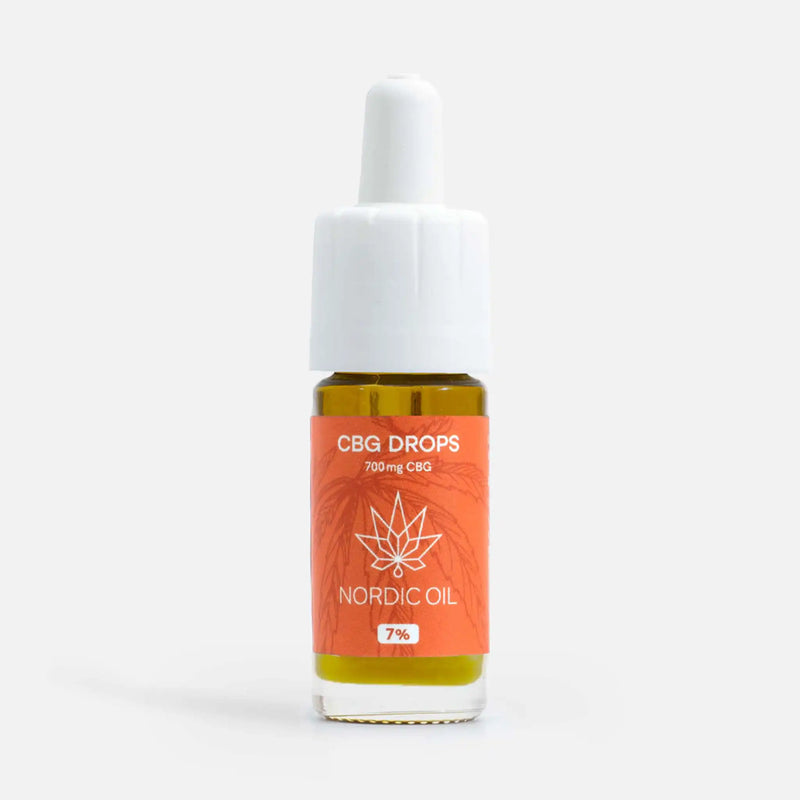
CBG Oil (7%)

Formation and occurrence compared:
- CBN: Forms through the breakdown of THC, found in higher amounts in aged cannabis
- CBG: Produced directly in the plant but quickly converted into other cannabinoids
- Availability: Both are rarer and typically more expensive than CBD, with CBG often harder to source
- Extraction: CBG is particularly complex to isolate due to its low natural concentration
How They Interact with the Body: Relaxing vs. Uplifting Profiles
CBN and CBG interact with the body’s endocannabinoid system in different ways. These differing interaction patterns are often linked to contrasting user experiences.
CBN interaction profile:
CBN is considered a mild agonist of CB1 and CB2 receptors, with somewhat greater affinity for CB2. These interactions are often associated with calming experiences.
- CB2 receptor interaction: Explored in research related to inflammation pathways
- Mild CB1 activity: Associated with subtle psychoactive effects
- GABA-related pathways: Being investigated in connection with relaxation
- Adenosine interaction: Studied for its possible role in natural sleep–wake signalling
CBG interaction profile:
CBG appears to have a broader interaction pattern, engaging with several receptor systems that are being studied for their role in alertness and mood.
- α2-adrenergic activity: Investigated in relation to attention and wakefulness
- 5-HT1A receptor interaction: Explored in mood-related research
- TRP channel interaction: Studied in laboratory settings
- Anandamide uptake: May influence levels of endocannabinoids in the body
CBN is commonly associated with calming evening use, while CBG is more often linked to daytime alertness. Their interaction profiles differ, but research is still ongoing.
Typical Use Contexts: When Might Each Be Chosen?
The differing profiles of CBN and CBG mean they are often chosen for different times of day.

CBN (Evening/Night):
CBN is frequently incorporated into evening routines, particularly by those looking to wind down.
- Sleep routines: Often discussed in relation to bedtime rituals
- Evening relaxation: Used when transitioning from a busy day
- Physical tension: Explored in connection with comfort and winding down
- Overstimulation: Sometimes chosen when seeking a calmer atmosphere
CBG (Daytime/Activity):
CBG is commonly selected for daytime use, particularly when alertness and focus are desired.
- Concentration: Often associated with mental clarity
- Low energy: Chosen as part of a morning routine
- Creative tasks: Sometimes used during focused work
- Alternative to caffeine: Considered by some as part of a non-caffeinated routine
Time-of-Day Approach
Because CBN and CBG are often described as having contrasting profiles, some users structure their routines accordingly.
CBN timing (evening):
- Early evening: As part of a wind-down routine
- Before bed: Typically taken 30–60 minutes before sleep
CBG timing (daytime):
- Morning: Incorporated into the start of the day
- Early afternoon: Used during working hours
- Late evening: Generally avoided by those sensitive to stimulating effects
Structured routine:
- Morning: CBG as part of a daytime routine
- Evening: CBN for winding down
CBG is typically used during the day, while CBN is more commonly associated with evening routines.
Dosage and Intensity
CBN and CBG differ not only in perceived direction of effect but also in typical usage ranges.
CBN:
- Lower amounts: Often 2.5–5 mg to begin with
- Common range: 5–20 mg depending on individual preference
- Onset: May take 30–90 minutes depending on format
CBG:
- Lower amounts: Often 5–10 mg initially
- Common range: 10–20 mg depending on individual response
- Onset: Sometimes reported as noticeable within 15–45 minutes
Comparison:
CBG is often used in slightly higher amounts than CBN. As with all cannabinoids, individual responses vary, and a gradual approach is recommended.
Side Effects and Tolerability
Both cannabinoids are generally described as well tolerated based on current knowledge, although research remains limited.
CBN:
- Drowsiness: Particularly when taken in larger amounts
- Dizziness: Occasionally reported
- Dry mouth: Common across cannabinoids
CBG:
- Restlessness: Sometimes reported at higher amounts
- Sleep disruption: If taken too late in the day
- Mild digestive discomfort: Occasionally noted
Comparison:
CBN is more commonly associated with drowsiness, while CBG may feel more stimulating to some individuals. Personal sensitivity plays an important role.
Combination: Can CBN and CBG Be Used Together?
Due to their commonly described contrasting characteristics, many users prefer not to take them at the same time.
Why some separate them:
- Different profiles: One associated with winding down, the other with alertness
- Individual response: Effects may feel less predictable when combined
Alternative approach:
- Morning: CBG
- Evening: CBN
- Spacing: Several hours between use
Availability and Cost
Both minor cannabinoids are less common and typically more expensive than CBD.
CBN:
- More widely available than before
- Often sold as oils
- Typically priced above comparable CBD products
CBG:
- Less widely available
- Usually sold as oils
- Often priced higher than CBN due to complex extraction
CBG is generally rarer and often more expensive than CBN. Both are usually available in oil form.
State of Research
Scientific research into both CBN and CBG is still in relatively early stages.
CBN:
- Studied particularly in relation to sleep
- Limited human trials available
- Long-term data remain limited
CBG:
- Broader research interest but fewer human studies
- Mechanisms still being explored
- Limited long-term safety data
Research gaps:
As with much cannabinoid research, funding limitations and regulatory challenges have led to small study sizes. Current evidence does not support definitive medical conclusions.
Choosing Between CBN and CBG
The choice between CBN and CBG largely depends on when and why you intend to use them.
CBN may be considered for:
- Evening routines
- Winding down after a busy day
- Supporting a bedtime ritual
CBG may be considered for:
- Daytime routines
- Periods requiring focus
- Morning use
Considering both:
- Daytime CBG and evening CBN
- When exploring a structured daily routine
Practical Tips
Using CBN:
- Incorporate into an evening routine
- Start low and increase gradually
- Allow time before bed
Using CBG:
- Take earlier in the day
- Avoid late evening use if sensitive
- Monitor your individual response
Quality and Safety
Because CBN and CBG are less common and often more expensive, quality assurance is especially important.
- Certificate of Analysis (COA): Third-party lab testing is essential
- Purity: Check cannabinoid content and absence of contaminants
- Extraction method: CO2 extraction preferred
- Transparent labelling: Clear ingredient lists
Read more in our CBN safety guide.
Conclusion: Complementary Cannabinoids
CBN and CBG are not direct competitors but are often viewed as complementary cannabinoids with contrasting profiles. CBN is commonly associated with evening relaxation, while CBG is more often linked to daytime alertness.
Key differences at a glance:
- Profile: CBN calming, CBG uplifting
- Timing: CBN evening, CBG daytime
- Dosage: CBN often used in slightly lower amounts
- Availability: CBN more established, CBG rarer
- Research: Both still emerging areas
Your choice depends on your routine and preferences. Whichever you choose, prioritise quality and begin with lower amounts to assess your individual response.