
Essential Oils for Headaches: How to Make a Natural Routine
Stefanie StinglUpdated:The essentials at a glance:
Essential oils are often used as a natural option when dealing with headaches. Peppermint has a cooling sensation and is commonly used for tension-type headaches. Lavender is known for its calming aroma and is frequently discussed in relation to migraine. Eucalyptus is often used to create a feeling of clearer sinuses. Rosemary is associated with stimulating circulation. Application is usually to the temples or via inhalation. Essential oils should be diluted with a carrier oil and a patch test is recommended. Children and pregnant individuals should consult a doctor before use. Dosage instructions should be followed and contact with the eyes avoided. A CBD roll-on can be used for targeted application.
Headaches can significantly affect daily life and are among the most common health-related complaints. Many people look for alternative approaches to conventional medication, either to avoid it or to complement it. Essential oils are often considered a natural option for easing headaches and have a long tradition in aromatherapy. This article looks at how essential oils may help with headaches and introduces the CBD Roll-On from Nordic Oil as a practical option that can be used in this context.
Essential oils are widely used in aromatherapy and are often explored as part of natural routines for dealing with headaches.
What are essential oils?
Essential oils are highly concentrated, natural extracts obtained from the leaves, flowers, stems and roots of plants. They are mainly produced through steam distillation, cold pressing or tapping resins. These oils are known for their aromatic properties and are used in aromatherapy in an effort to support physical and mental wellbeing.
The use of essential oils goes back a long way in various traditions. They have been used in connection with a wide range of concerns, from emotional balance through to general physical comfort.
How might essential oils be associated with headaches?
Essential oils are thought to interact with the body in several ways and are commonly discussed in relation to headache relief. They may influence the central nervous system and local blood flow. Components such as menthol in peppermint oil and eucalyptol in eucalyptus oil have specific sensory properties that are frequently associated with soothing effects.
Menthol, for example, provides a cooling sensation and is often used in products intended to relax muscles and support circulation, which some people find helpful for tension-type headaches. Eucalyptol is often mentioned in relation to products used around the sinuses. Whether used by inhalation or applied to the skin, these oils can activate sensory receptors and may contribute to a perception of relief for some individuals.
Oils such as peppermint, eucalyptus and lavender are commonly chosen for headaches due to their cooling, calming or clarifying aromas.
The most commonly used essential oils for headaches
Certain essential oils are particularly popular among people who use aromatherapy when they have headaches. The following are frequently mentioned in this context:
- Peppermint oil: Known for its high menthol content and cooling sensation.
- Lavender oil: Often used in relaxation-focused routines.
- Eucalyptus oil: Commonly associated with sinus-related comfort.
- Rosemary oil: Traditionally used where circulation and alertness are a focus.
These oils can be used in different ways: applied (diluted) to the temples, inhaled using a diffuser, or added to a warm bath. Proper dilution is important to reduce the risk of irritation.

Use and safety
When using essential oils, certain guidelines should be followed to help ensure safe and considered use:
- Dilution: Always dilute with a carrier oil before applying to the skin.
- Patch test: Test a small area of skin before first use.
- Inhalation: Use diffusers to avoid overly intense aromas.
- Pregnancy and children: Seek medical advice before use.
- Avoid contact with eyes: Rinse thoroughly with water if contact occurs.
CBD Roll-On from Nordic Oil in the context of headaches
A CBD Roll-On is a topical product designed to offer the benefits of CBD in a convenient, targeted format. It is applied directly to areas such as the temples, neck or forehead as part of a personal self-care routine.
The CBD Roll-On from Nordic Oil combines selected essential oils with CBD, bringing together aromatic elements with a topical CBD formulation.
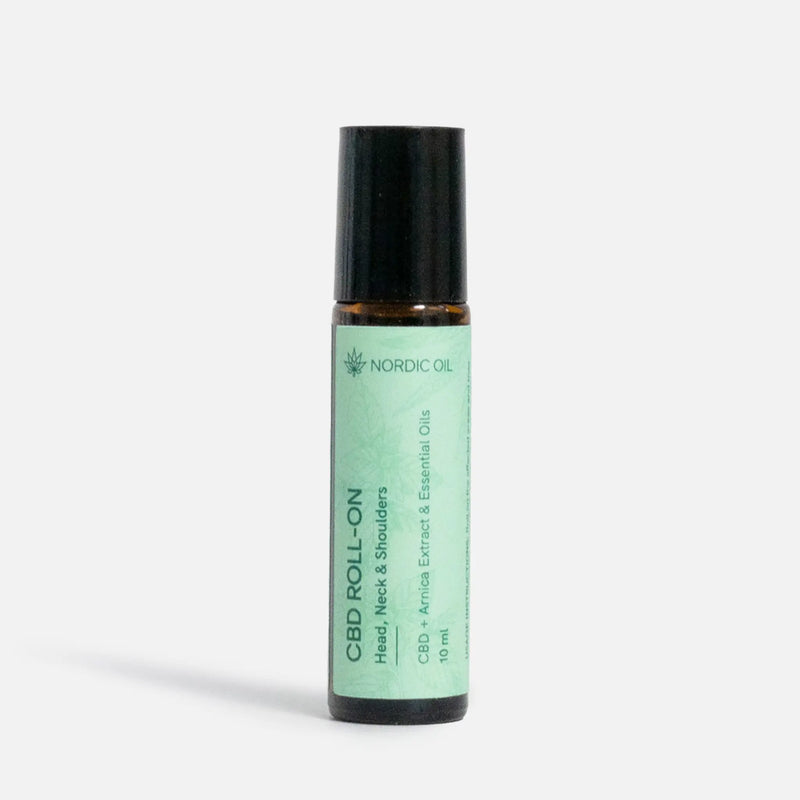
CBD Roll-On
CBD roll-ons combine essential oils with CBD in a topical format, offering a targeted and easy-to-use option that many people include in headache-related routines.
Combining CBD and essential oils
The combination of CBD and essential oils in topical products is increasingly popular among people looking for plant-based options. When used together, these ingredients are often described as offering a broader sensory experience as part of everyday self-care.