
Biotin and Hair Growth: How Vitamin B7 Supports Strong, Healthy Hair
Leila WehrhahnUpdated:Key points at a glance:
Biotin, also known as vitamin B7, plays a role in keratin formation in hair and nails. It is considered particularly relevant where a deficiency has been identified. In the absence of a deficiency, a clear benefit for hair growth has not been established. In one study, 38% of women with hair loss were found to have a deficiency. It is advisable to have blood levels checked before taking a supplement. The German Nutrition Society (DGE) recommends a daily intake of 30 to 60 µg. Supplements often contain significantly higher amounts. High doses may interfere with certain laboratory tests, so it is important to inform your doctor about any biotin supplements you are taking.
When it comes to healthy skin, strong hair and robust nails, the term biotin is often mentioned. Also known as vitamin B7 or vitamin H, this vitamin plays an important role in metabolism and is particularly popular as a food supplement for hair and nails. But how strong is the connection between biotin and hair growth? And more importantly: can biotin make a difference in hair loss if there is no deficiency?
This article uses scientific studies to explain how biotin works, when supplementation may be appropriate, and what realistic expectations you can have. We also look at why taking biotin as a blanket measure without prior blood tests can be problematic.
Biotin may support hair growth when there is a confirmed deficiency. With normal biotin levels, the effect is uncertain. One study shows: 38% of women with hair loss had a biotin deficiency – but 62% had normal levels despite hair loss. This article explains when biotin may genuinely be useful.
What you will learn in this article:
- How biotin supports the structure of hair and nails
- What the science actually says about the effects of biotin on hair
- When biotin is sensibly used in relation to hair loss – and when not
- Why 38% of women with hair loss have a biotin deficiency
- How much biotin per day is recommended and why supplements often contain much higher doses
- Which symptoms may indicate a biotin deficiency
- Why you should have a blood test before starting supplementation
What is biotin and how does it work?
Biotin (vitamin B7 or vitamin H) is a water-soluble B vitamin that acts as a cofactor for important enzymes in metabolism. It is involved in:
- Fatty acid synthesis: Formation of long-chain fatty acids
- Amino acid metabolism: Breakdown of branched-chain amino acids
- Gluconeogenesis: Formation of glucose from non-carbohydrate sources
These processes are important for maintaining healthy skin and hair. Biotin supports the formation of keratin (not creatine), the main structural protein in hair, nails and skin. A lack of biotin could therefore theoretically contribute to hair-related problems.
👉Insider tip: The fruit gummies from Nordic Oil Essentials contain biotin in combination with additional nutrients for hair and nails.
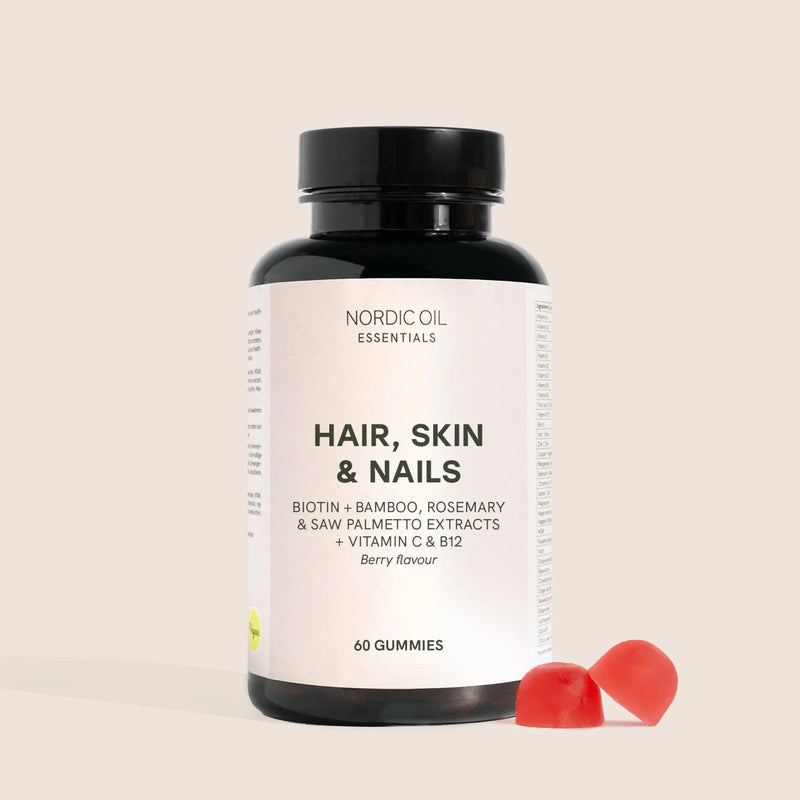
Hair Skin and Nails Gummies
Conclusion: An honest view of biotin and hair growth
Biotin is an important vitamin for metabolism and is involved in the maintenance of skin, hair and nails. However, the scientific evidence paints a more differentiated picture than simple “hair vitamin” claims suggest.
What is supported by scientific evidence:
- ✅ 38% of women with hair loss in one study had a biotin deficiency (Trüeb 2016)
- ✅ In cases of confirmed deficiency, biotin supplementation is considered helpful
- ✅ Biotin deficiency is often associated with hair loss, brittle nails and seborrhoeic dermatitis
- ✅ Certain groups (pregnant women, people on specific medicines, those with gut disorders) appear to have a higher risk of deficiency
What is uncertain or not supported:
- ❌ Benefits for people with normal biotin levels – insufficient evidence
- ❌ Significant effects in hereditary hair loss – likely to be very limited
- ❌ Routine use of biotin without diagnosis – questioned by experts
Evidence-based recommendations:
- In hair loss: Seek medical advice first, then consider a biotin blood test if appropriate
- With confirmed deficiency: Biotin supplementation (often 5–10 mg/day) can be considered under medical supervision
- With normal levels: Additional biotin is unlikely to have a noticeable effect
- Optimise your diet: Include a range of biotin-rich foods
- Be patient: Where biotin is useful, visible changes to hair may take 3–6 months
- Inform your doctor: Always mention biotin use before blood tests, due to possible interference with lab results
The key message
The Trüeb study puts it clearly: “The practice of treating women with hair loss routinely with biotin should be discouraged.” Instead, an individual diagnostic approach is needed.
Biotin is not a miracle solution for every type of hair loss, but for the right individuals – particularly the 38% with demonstrated deficiency in the Trüeb study – it may form a useful and well-tolerated part of a broader treatment plan.