
What helps with brittle nails?
Leila WehrhahnUpdated:Key points at a glance:
Brittle nails often have several contributing factors. Common influences include frequent contact with water, cleaning products, UV lamps, cold temperatures or acetone. Nutrient intake, thyroid function, skin conditions and certain medications may also play a role. Nutrients frequently discussed in connection with nail health include biotin, silica, vitamin C, vitamin B12, zinc and iron, although noticeable changes may take several months. Practical tips include gentle nail care, using gloves, nail oil, moisturising products, and a diet that includes protein-rich foods, vegetables and wholegrains. Persistent or severe symptoms should be assessed by a doctor.
Brittle nails – a common issue
Many people experience brittle, splitting or soft nails. This does not only affect appearance, but can also have an impact on everyday comfort. Those affected often wonder: What are the underlying causes – and what can really make a difference?
This article explains which factors are associated with brittle nails, which nutrients and plant extracts may help support nail strength, and which practical tips are commonly recommended. In addition, we introduce the Nordic Oil Essentials Skin, Hair & Nails Gummies, which combine a range of selected ingredients.
What you will learn in this article
- Which factors may contribute to brittle nails
- Which nutrients (biotin, silica, vitamin C, vitamin B12, zinc) are commonly associated with nail strength
- What study results suggest about biotin and silica
- Practical tips for care and nutrition
Brittle nails can be influenced by both internal and external factors. This article outlines nutrients and tips that may help support nail health.
What are brittle nails?
In medical terminology, brittle or splitting nails are referred to as onychoschisis (horizontal splitting) or onychorrhexis (longitudinal ridging and brittleness). The nails appear thin, tear easily and split at the edges. These changes are often accompanied by visible irregularities and may sometimes be uncomfortable.
People who frequently have their hands in water, work with cleaning products or regularly use nail polish and UV lamps are particularly affected. However, insufficient nutrient intake or underlying health conditions may also influence nail structure.
To respond appropriately, it is useful to understand the possible causes – and to consider whether external stressors or internal factors such as low biotin intake might be relevant.
Medically, brittle nails are referred to as onychoschisis or onychorrhexis. Possible influences include external stressors and nutrient deficiencies.
Causes of brittle nails in detail
Brittle nails can indicate that the body or the nails themselves are under strain – whether from environmental influences or internal factors. Several aspects often interact.
👉 Tip: The Skin, Hair & Nails Gummies from Nordic Oil Essentials provide biotin, silica and vitamin C in a simple daily portion.
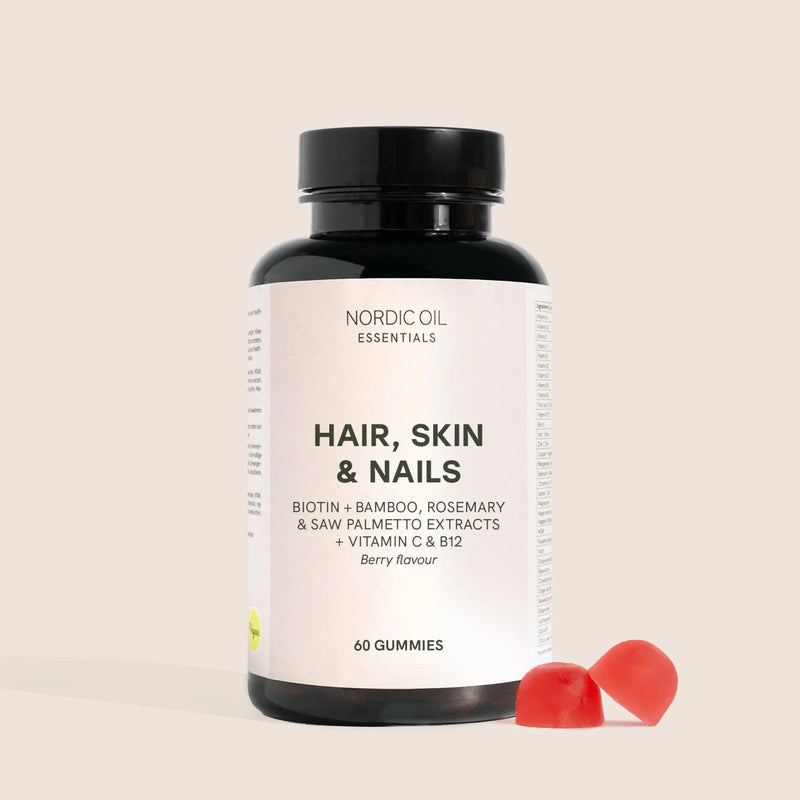
Hair Skin and Nails Gummies
Nutrient deficiencies
If certain vitamins or minerals are lacking, this may be reflected in the structure of the nails:
- Biotin (vitamin B7) → involved in keratin formation; one of the best-known micronutrients discussed in relation to nail health
- Vitamin B12 → contributes to normal cell division and red blood cell formation
- Vitamin C → contributes to normal collagen formation
- Zinc and iron → involved in many processes related to tissue maintenance and growth
External influences
Everyday habits and environmental factors may also weaken nails. Common examples include:
- Frequent contact with water and cleaning agents
- UV lamps for gel or shellac nails
- Regular use of nail polish removers containing acetone
- Cold temperatures and dry air
Conditions & medicines
Sometimes brittle nails may be associated with underlying conditions. These can include thyroid issues, skin conditions (such as psoriasis) or circulatory problems. Certain medicines may also have an impact on nail appearance and quality.
Nutrient gaps, chemicals, UV lamps or underlying conditions may all play a role in weakening nails. Often, several factors are involved at the same time.
Nutrients & plant extracts for nail support
Targeted intake of specific vitamins and minerals may help support the resilience of nails. The following substances are particularly often discussed in this context:
Biotin
Biotin is one of the best-known vitamins for skin, hair and nails. It is involved in the formation of keratin, the structural protein that makes up the bulk of the nail. Studies suggest that regular intake may be associated with improved firmness and thickness in brittle nails.
Silica (bamboo extract)
Bamboo extract is considered a particularly rich source of silica. This mineral is involved in connective tissue formation and is often associated with the structural integrity of hair and nails. It may help reduce the tendency of nails to tear or split.
Vitamin C
Vitamin C is important for collagen formation, which supports not only skin but also nail structure. Due to its antioxidant properties, it also helps protect cells from oxidative stress, which may indirectly affect nail appearance.
Vitamin B12
Low vitamin B12 levels can sometimes be reflected in pale, brittle or discoloured nails. Vitamin B12 plays a role in normal cell division and red blood cell formation, which are important for the nail matrix.
Zinc and iron
These trace elements are involved in the growth and maintenance of tissues, including nails. Inadequate intake may be associated with slower nail growth and increased brittleness.
Rosemary extract
Rosemary has traditionally been used in connection with circulation-supporting properties. In combination with other nutrients, it may help support the supply of the nail matrix.
Biotin, silica, vitamin C, vitamin B12, zinc and iron are commonly used to support nails from within. Rosemary is traditionally associated with supporting circulation around the nail matrix.
Research: what does the science say?
The potential role of certain nutrients in supporting nail strength has been explored in various studies. Although findings are not always entirely consistent, some tendencies have emerged:
- Biotin: Studies indicate that supplementation in people with brittle nails may be associated with improvements in nail thickness and resistance, particularly where low biotin status is present.
- Silica (e.g. from bamboo extract): Research suggests that regular intake over several months may be linked to improved elasticity and stability of nails.
- Vitamin C & iron: These nutrients have not been primarily studied for nails themselves, but their roles in collagen formation and oxygen transport suggest an indirect relevance for nail health.
It is important to note that food supplements tend to act gradually. Changes in nail appearance usually only become noticeable after several months of consistent use, if at all.
Research suggests that biotin and silica may help support brittle nails. Any effects generally become apparent only after several months of regular intake.
Practical everyday tips
Apart from nutrients, small changes to daily routines may also help support the strength and condition of the nails:
- Gentle nail care: Avoid filing nails too short, minimise the use of acetone-based nail polish removers, and use nail oil regularly.
- Protection from chemicals: Wear gloves when doing housework, washing up or gardening.
- Moisturising care: Use nourishing creams or oils on nails and cuticles to help prevent dryness.
- Nutrition: Protein-rich foods, nuts, eggs, wholegrains and green vegetables provide important building blocks associated with strong nails.
- Lifestyle: Managing stress and getting sufficient sleep can have a positive effect on overall wellbeing, which may also be reflected in nail growth.
Combined with targeted supplementation, these habits may, over time, contribute to stronger, more resilient nails.
Nourishing oils, protective gloves, a protein-rich diet and stress management can all support nail health alongside supplementation.
Nordic Oil Essentials Skin, Hair & Nails Gummies
An easy way to combine several key nutrients associated with nail health is through the Nordic Oil Essentials Skin, Hair & Nails Gummies. They contain:
- Biotin – involved in keratin formation and supports normal hair and skin
- Vitamin C – contributes to normal collagen formation and helps protect cells from oxidative stress
- Vitamin B12 – important for normal cell division and red blood cell formation
- Bamboo extract – a source of silica, commonly associated with structural support
- Saw palmetto extract – traditionally used in products for hair and skin care
- Rosemary extract – traditionally associated with supporting circulation around the nail area
Thanks to their gummy format, the ingredients can be easily incorporated into a daily routine. The combination of several compounds makes them a versatile option for those who wish to support their nails from within.
Hair Skin and Nails Gummies
The Nordic Oil Essentials gummies combine biotin, vitamins C and B12, bamboo, rosemary and saw palmetto extracts for simple daily support of nail care from within.
Conclusion
Brittle nails can have many contributing factors – from external stressors such as chemicals to insufficient nutrient intake. Targeted intake of biotin, silica, vitamin C, vitamin B12, zinc and iron may help support nail health. Alongside this, gentle nail care, a balanced diet and a healthy lifestyle can be useful in maintaining nails over the long term.
The Skin, Hair & Nails Gummies from Nordic Oil Essentials offer a practical way to combine several of these nutrients and integrate them easily into everyday life.
Legal notice: This information does not replace medical advice. If nail problems persist or are severe, a medical assessment is recommended.