
Biotin Effects: Benefits for Skin, Hair and Nails
Leila WehrhahnUpdated:The essentials at a glance:
Biotin, also known as vitamin B7, plays a role in the metabolism of fats, carbohydrates and protein, as well as in keratin formation. Evidence for benefits relating to skin and hair in people without a deficiency is limited. The best documented effects are in connection with brittle nails and in cases of biotin deficiency. Initial changes are often reported after 2 to 3 months, and for nails frequently after around 6 months. General intake recommendations are typically in the range of 30 to 60 µg per day, while supplements often contain higher amounts. High doses may interfere with certain laboratory tests, so it is advisable to inform a doctor before having blood tests.
Why is biotin so popular?
Anyone interested in maintaining healthy-looking skin, strong hair and robust nails will sooner or later come across the term biotin. But what effects is biotin associated with and how long might it take before any effects of biotin are noticeable? In the field of food supplements there are numerous promises – but what does scientific research actually say?
This article summarises, on the basis of scientific studies, the role biotin plays in the body, how it may be linked with skin, hair and nails, and in which situations supplementation might be considered.
Biotin is an important B vitamin that plays a central role in metabolism. The scientific evidence for its impact on hair, skin and nails is limited. Reported positive effects are mainly seen where there is a confirmed biotin deficiency. This article explains the basics, mode of action, use and possible risks based on current research.
What you will learn in this article:
- Basics: What is biotin (vitamin B7 or vitamin H) and how does it work in the body?
- Scientific evidence on the role of biotin in relation to skin, hair and nails
- How long it may take before any noticeable effects of biotin occur
- Who may potentially benefit from biotin supplementation
- Typical dosage guidance and why food supplements often contain higher amounts
- Important side effects and interactions with laboratory tests
- How this relates to our Skin, Hair & Nails Gummies
👉Insider tip: Biotin is also included in the Nordic Oil Essentials Skin, Hair & Nails Gummies – easy to integrate into everyday life.
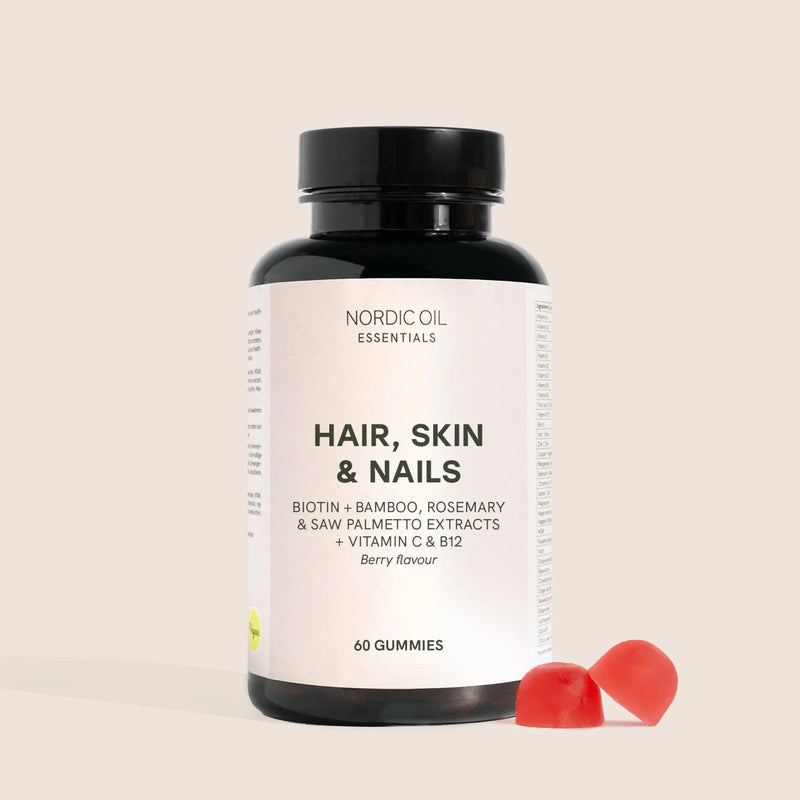
Hair Skin and Nails Gummies
Conclusion: What do we really know about biotin?
Biotin has a well-established role in energy metabolism as a cofactor for key enzymes. The scientific evidence for cosmetic-type effects on skin, hair and nails, however, is more nuanced than is sometimes suggested.
What the science clearly indicates:
- ✅ Biotin is essential for the metabolism of fats, carbohydrates and proteins
- ✅ In confirmed biotin deficiency, supplementation is clearly beneficial
- ✅ The best evidence relates to improving brittle nails
- ✅ Biotin deficiency is relatively rare in industrialised countries
What remains uncertain:
- ⚠️ Effects on hair and skin in people without deficiency
- ⚠️ The optimal dosage for cosmetic purposes
- ⚠️ Long-term impact of very high doses
- ⚠️ The extent of synergistic effects with other nutrients
What you should keep in mind:
- Patience is required: Any visible changes are usually discussed over 2–6 months
- No miracle solution: Biotin is not a substitute for medical treatment of hair loss or skin conditions
- Laboratory test interference: The main safety concern is distortion of blood test results
- Consult your doctor: Especially if you have existing health conditions, take medicines or have upcoming blood tests
An honest assessment:
While biotin clearly helps in cases of confirmed deficiency and may offer benefits for brittle nails, the evidence for “super hair and perfect skin” in otherwise healthy individuals is limited. The popularity of biotin supplements currently exceeds the strength of the scientific evidence for their effectiveness in the general population.
Our suggestion:
- Follow a balanced diet including biotin-rich foods
- If you have specific concerns (hair loss, nail changes, skin issues): seek medical advice first and then consider targeted supplementation if appropriate
- If you decide to try biotin: allow at least 3 months and monitor any changes with realistic expectations
- Always inform your doctor if you are taking biotin
Note: This article is for information purposes only and does not replace medical advice. If you have any health-related questions, please consult a doctor or other qualified healthcare professional. The information reflects the current state of scientific research but may change as new studies become available.