
Saw palmetto for hair loss: How Serenoa repens affects the hair
Leila WehrhahnUpdated:The essentials at a glance:
Saw palmetto is frequently discussed in connection with androgenetic hair loss. It is thought to influence the enzyme 5-alpha-reductase and thereby affect DHT levels. Some studies report moderate effects, including improvements in hair status in men, increases in hair count and higher hair density. In research, finasteride generally shows a stronger effect. Saw palmetto can be taken orally or used topically. Initial changes are typically reported after around 12 to 16 weeks in studies. Side effects are described as uncommon. It is usually not recommended during pregnancy or breastfeeding. Caution is advised when used alongside blood-thinning medication or hormonal contraception, and it may influence PSA levels.
Saw palmetto as a natural option for hair loss
Hair loss affects many people and can have a variety of causes – from genetic factors to stress or low nutrient intake. Increasingly, saw palmetto, also known as Serenoa repens, is being discussed as a plant-based option alongside pharmaceutical treatments. But what does current research actually say about the potential effects of saw palmetto in hair loss?
This article summarises the current state of knowledge based on clinical studies: how saw palmetto extract for hair is thought to work, whether there are differences between men and women, how it compares with established medicines, and what realistic expectations might look like.
Saw palmetto (Serenoa repens) inhibits the enzyme 5-alpha reductase and can therefore reduce DHT. Studies show moderate success: 38% improvement in men (vs. 68% with finasteride), 27% increase in hair count, 83.3% improvement in hair density. The effect is weaker than prescription drugs, but with fewer side effects.
What you will learn in this article:
- How saw palmetto (Serenoa repens) works biochemically – inhibition of 5-alpha-reductase
- What clinical studies actually show: concrete figures and comparisons
- Saw palmetto vs finasteride: a direct comparison
- Differences between men and women – what research suggests
- Realistic timeframes: when potential effects may appear
- Dosage, use and important safety information
- What users commonly report
What is saw palmetto?
Saw palmetto (Serenoa repens) is a small palm species that mainly grows in the south-eastern United States, particularly in Florida. The dried berries of this plant have been used traditionally for a wide range of purposes.
Composition of saw palmetto extract
The berries are used to obtain a lipophilic (fat-soluble) extract. This contains:
- Free fatty acids: 70–95% (mainly lauric acid, myristic acid, oleic acid, palmitic acid)
- Phytosterols: Especially β-sitosterol (0.1–0.3%)
- Other components: β-carotene, vitamin E derivatives, polysaccharides
The exact composition can vary depending on extraction method and manufacturer, which is why standardised extracts are regarded as important in research.
How might saw palmetto influence hair loss? The biochemical mechanism
The discussion around saw palmetto and hair loss is largely based on several biochemical mechanisms that are linked to the hormone DHT (dihydrotestosterone).
👉Tip: Nordic Oil Essentials gummies combine saw palmetto with biotin and vitamin C as part of a broader nutritional approach.
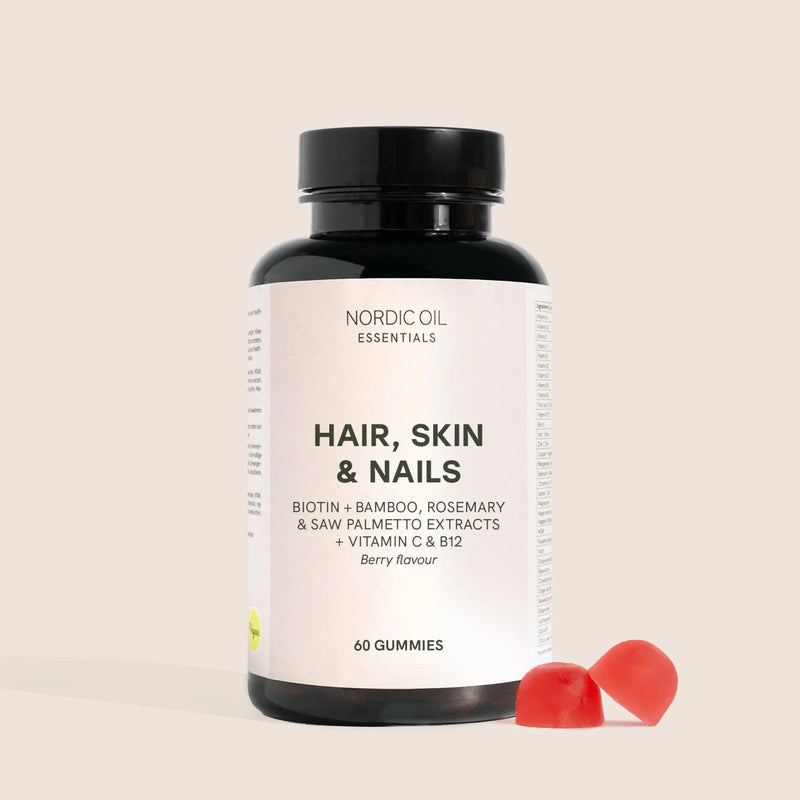
Hair Skin and Nails Gummies
Conclusion: what do we really know about saw palmetto and hair loss?
Saw palmetto (Serenoa repens) is one of the better-studied plant extracts in the context of androgenetic alopecia. Taken together, the available evidence paints a nuanced picture:
Findings supported by current research:
- ✅ Moderate effect size: Around 38% of men improved in one key study (Rossi 2012)
- ✅ 27% increase in hair count, 83.3% higher hair density in a systematic review (2020)
- ✅ DHT reduction: Serum DHT decreased by around 15–30% in several trials
- ✅ Generally fewer side effects compared with finasteride (no consistent evidence of sexual dysfunction)
- ✅ Comparable effects in men and women in some mixed-sex trials (VISPO 2023)
- ✅ Stabilisation: Around 52% of users experienced no further progression in some studies
A balanced assessment:
- ⚠️ Appears to be roughly half as potent as finasteride in some head-to-head data (38% vs 68%)
- ⚠️ Typically requires 3–6 months before noticeable changes are seen
- ⚠️ Less suitable as a standalone option in advanced hair loss; more promising in earlier stages
- ⚠️ Individual variation: Not everyone responds
- ⚠️ In women: Fewer studies available, and particular caution is needed with pregnancy and hormonal contraception
Evidence-informed guidance:
- For early hair thinning: Saw palmetto may offer a reasonable risk–benefit balance for some individuals
- As a long-term strategy: In those with a family tendency to thinning hair, early and consistent use may be considered as part of a broader approach
- In combination: Often used together with biotin, vitamins or pumpkin seed oil with the aim of synergistic support
- For advanced hair loss: Discuss finasteride or minoxidil with a healthcare professional, as these generally show stronger effects
- Patience: A trial of at least 6 months is usually needed before drawing conclusions about its usefulness for you
- Consult a doctor: Especially if you take medicines, are planning surgery, or are a woman with hormonal issues or using hormonal contraception
The key message
Saw palmetto is not a miracle cure, but it is a well-researched plant-based option with a comparatively gentle side effect profile. It tends to show moderate effects in studies and is generally well tolerated, which makes it an interesting choice for people seeking a milder alternative to conventional medicines or a complement to them.
For the right individuals (early-stage, DHT-related hair loss, willing to commit for several months), saw palmetto can form a useful part of a comprehensive hair loss management plan.
Disclaimer: This article is for general information only and does not constitute medical advice. If you have health concerns or ongoing hair loss, please consult a doctor or another qualified healthcare professional. Saw palmetto may interact with medicines – always inform your doctor about any supplements you are taking.