
What Helps with Hair Loss? An Overview of Causes and Solutions
Leila WehrhahnUpdated:Key points at a glance:
Hair loss can have many causes. Genetic factors and hormones are common, but nutrient deficiencies, stress, health conditions and certain medications are also discussed in this context. Types of hair loss include androgenetic, diffuse and circular (patchy) hair loss. Losing around 50 to 100 hairs per day is generally considered normal. It is advisable to clarify the underlying cause with a healthcare professional. Nutrients and plant substances such as biotin, saw palmetto, vitamin B12, silica from bamboo, vitamin C and rosemary are often mentioned in relation to hair health. Any potential effect is likely to take several months and may vary from person to person. Sudden hair loss should be assessed by a doctor.
Hair loss – what really helps?
Hair loss affects many women and men and can be emotionally challenging. The triggers are varied: from genetic predisposition and hormonal changes through to nutrient gaps or stress. The possible approaches are just as diverse. This article guides you systematically through the types and causes of hair loss and outlines evidence-based nutrients and plant extracts that may help to support hair health – including indications on dosage, an overview of studies, and practical everyday tips.
What you will learn in this article
- The difference between normal and potentially concerning hair loss
- Main types: androgenetic, diffuse, patchy
- Nutrients & extracts (e.g. biotin, saw palmetto, vitamin B12, bamboo extract)
- Research overview, use & dosage, and differences between women and men
Hair loss has many causes. This guide explains its types, potential triggers and nutrients that, according to studies, may help support hair health.
What is hair loss?
A daily loss of around 50–100 hairs is considered normal – hair follows natural growth cycles. The term hair loss in a narrower sense is usually used when the shedding rate is increased over a longer period of time, or when visible thinning/bald patches occur.
Common types
- Androgenetic hair loss: Influenced by hereditary and hormonal factors; in men often receding hairline/bald spot, in women diffuse thinning along the parting. DHT (dihydrotestosterone) is thought to play a role.
- Diffuse hair loss: Even thinning of the entire head of hair. Possible triggers include, for example, nutrient deficiencies (biotin), vitamin B12 deficiency, stress, thyroid imbalance or medication.
- Alopecia areata (patchy hair loss): Typically presents as round, clearly defined patches; this is an autoimmune-related form. Medical evaluation is particularly important here.
Important: Correctly classifying the hair issue (type + underlying factors) is crucial so that any measures can be targeted – for example, hormone-related approaches for androgenetic alopecia or optimising nutrient intake in cases of diffuse hair loss.
👉Insider tip: Nordic Oil Essentials gummies combine biotin, vitamin B12 and saw palmetto extract – a practical way to support healthy-looking hair.
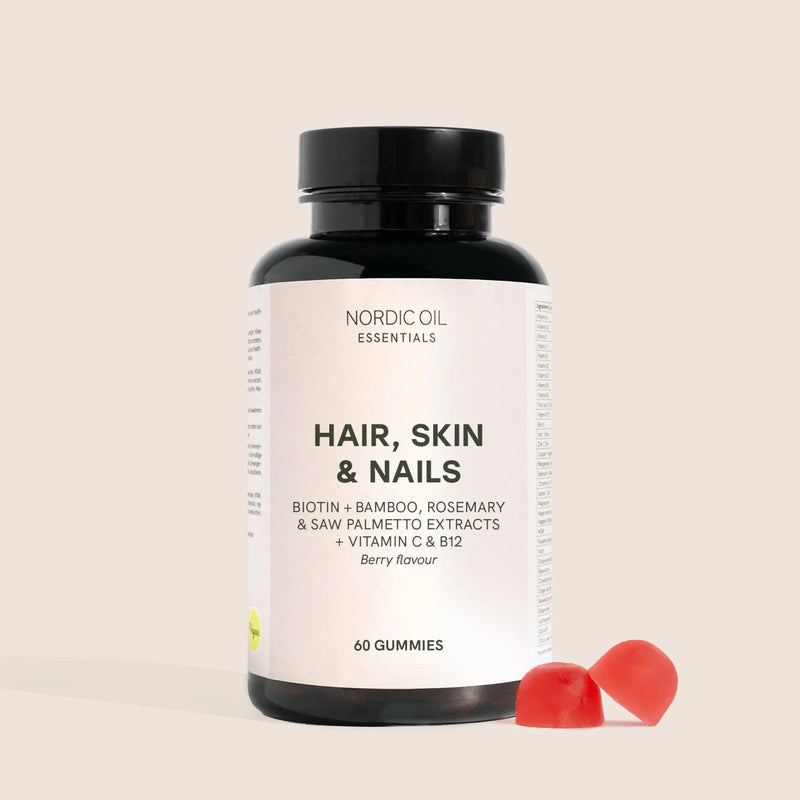
Hair Skin and Nails Gummies
Nordic Oil Essentials gummies combine biotin, vitamins C and B12, bamboo, rosemary and saw palmetto extracts in a simple daily format.
Conclusion
Hair loss is a complex topic with many contributing factors – from genetics and hormones through to nutrient intake and stress. Anyone wishing to address it effectively should first clarify their individual situation. Food supplements with biotin, saw palmetto extract, vitamin B12, bamboo-derived silica and vitamin C may help to support hair health. Combined with a healthy lifestyle, this can offer favourable conditions for promoting hair growth in the long term.
Legal notice: This information does not replace medical advice. In cases of severe or sudden hair loss, you should seek medical guidance.