
Taking Shilajit and Ashwagandha Together: Synergy or Just Hype?
Leila WehrhahnUpdated:Key points at a glance:
Shilajit and ashwagandha are natural substances used in Ayurveda. People commonly report experiences such as decreased stress, improved sleep quality, and increased energy and stamina. A potential synergy is discussed, as shilajit may support bioavailability. However, data on this specific combination remain limited. It is advisable to choose purified shilajit. Caution is recommended for individuals with thyroid conditions, autoimmune issues, during pregnancy, and while breastfeeding. Commonly mentioned daily amounts are 250 to 500 mg for shilajit and 300 to 600 mg for ashwagandha.
Shilajit and ashwagandha are among the best-known natural substances used in Ayurvedic traditions. This combination is often discussed in relation to stress, energy and vitality, stamina, hormonal balance and immune function. Could these two natural substances complement each other?
Shilajit + ashwagandha is a popular Ayurvedic combination. Potential yes, but evidence for the combination is limited; quality and safety come first..
What is shilajit?
Shilajit is a natural, resin-like mineral substance that forms over centuries from plant material and microbial activity in mountainous regions (e.g. the Himalayas). It is rich in fulvic acid, humic substances and trace elements. In Ayurveda, shilajit is traditionally described as a “Yogavahi” (carrier/enhancer) – a substance that may help support the action of other substances. Modern review papers describe fulvic acid as a central bioactive component with antioxidant and potentially neuroprotective properties (3).

Shilajit Capsules
You can find more on possible effects and background in our article Shilajit effects.
What is ashwagandha?
Ashwagandha (Withania somnifera) is a nightshade plant often classified as an adaptogen. As an “adaptogen”, it is mainly discussed in relation to stress, sleep quality and mental resilience. Clinical studies suggest that standardised root extracts may help reduce perceived stress and influence cortisol levels (1). In sports and performance studies, effects on muscle strength and recovery, as well as a moderate increase in testosterone in men, have been reported (2). These findings relate to ashwagandha used alone; robust human studies on its combination with shilajit are not yet available.
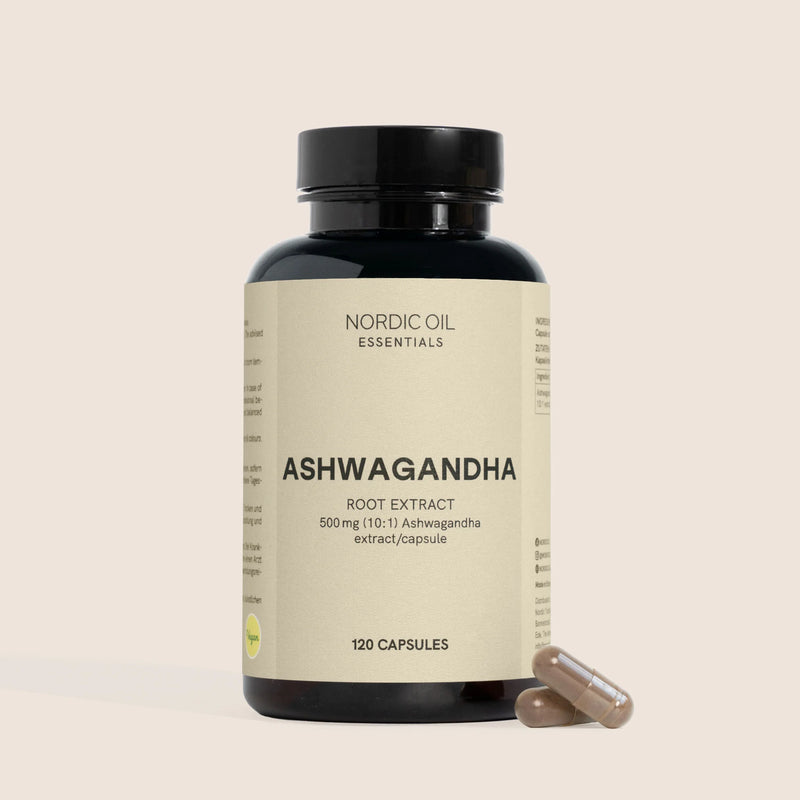
Ashwagandha Capsules
Why combine shilajit and ashwagandha?
From a theoretical perspective, shilajit, thanks to its fulvic acid content, may support the absorption and distribution of nutrients. This potential “bioavailability support” could make ashwagandha extracts more efficiently utilised in the body (3). Both substances are also traditionally described as adaptogenic/tonic: ashwagandha more in relation to nerves and stress, shilajit more in relation to energy and minerals. Modern explanations therefore often frame the combination as an attempt to address stress resilience (ashwagandha) and cellular energy/metabolism (shilajit) at the same time.
Important: Evidence for possible synergies comes mainly from experience reports and traditional use. High-quality, controlled studies on the specific combination are still lacking.
Theoretical synergy: Ashwagandha for stress/sleep, Shilajit for energy/bioavailability. Evidence for this combination is currently limited.
Potential benefits (from single-ingredient studies and experience reports)
- Stress and sleep: Ashwagandha has been studied in relation to stress and sleep quality, with some trials suggesting beneficial effects (1). In combination, there is interest in whether shilajit’s fulvic acid content might support the way ashwagandha is utilised (3).
- Energy and vitality: Shilajit is discussed in the scientific literature in connection with mitochondrial function and antioxidant protection (3). Users often subjectively report feeling more “drive”.
- Performance and recovery: Ashwagandha has been associated with improvements in strength and recovery in sports studies (2); with shilajit, some authors speculate about a complementary role regarding stamina and energy provision.
- Hormonal balance (men): Ashwagandha may be linked to moderate increases in testosterone in the context of resistance training (2). For shilajit, there are indications of relevance for male reproductive parameters from preclinical work and small human datasets, but these are not considered conclusive (3).
- Immune system: Both are often described as adaptogens with possible immunomodulatory properties; however, robust human data on the combination are lacking.
Please note: Individual studies often have small sample sizes and use different extracts/dosages. Results are not directly transferable to all products, and the combination itself has barely been tested in clinical settings (1–3).
Possible side effects & safety
- Quality/purity of shilajit: Insufficiently purified products may contain heavy metals or microbes. Look for purified, standardised products with independent testing (e.g. for heavy metals, microbes). WHO guidelines emphasise the need to control contaminants in herbal products (5). Investigations have repeatedly found heavy metals in some Ayurvedic preparations (6).
- Thyroid/autoimmunity: Ashwagandha may influence thyroid function; caution is advisable in cases of thyroid disorders (hypo-/hyperthyroidism). In autoimmune conditions, use should be discussed with a healthcare professional (4).
- Pregnancy & breastfeeding: Safety data for ashwagandha are insufficient; some professional sources advise against its use. The same precautionary approach is generally recommended for shilajit – medical advice is important (4).
- Interactions: Potential interactions with sedative agents, thyroid hormones, immunosuppressants, antihypertensives or antidiabetics should be considered (4). Please review your medication with a healthcare professional.
- Tolerability: Gastrointestinal discomfort, drowsiness (ashwagandha), headaches or skin reactions are possible. If unusual symptoms occur, stop taking the product and seek medical advice.
More detailed information is available in our articles Shilajit side effects and Shilajit interactions.
Caution should be exercised in cases of thyroid issues, autoimmunity, pregnancy, or breastfeeding. Only use tested, purified shilajit products; check for possible interactions.
How to take shilajit with ashwagandha
- Forms: Capsules, tablets, powder or resin (shilajit). Standardised extracts offer better comparability.
-
Dosage (general orientation, not medical advice):
- Shilajit: commonly 250–500 mg/day of a purified, standardised product (e.g. 15–20% fulvic acid).
- Ashwagandha: commonly 300–600 mg/day of a root extract (e.g. ~5% withanolides), split into 1–2 doses.
- Timing: With a small meal for better tolerability. Ashwagandha is often taken in the evening (sleep-related use), shilajit more in the morning for “energy” – this is individual and can be adjusted.
- Titration: “Start low, go slow”: begin with a low amount and increase step by step if well tolerated.
- Combination: It may be sensible to start with one substance alone for 1–2 weeks, then add the second. This can make it easier to attribute any effects and assess tolerability.
Who might consider this combination?
- Adults exploring natural options to support stress management and sleep quality.
- People interested in energy, vitality and stamina in everyday life or training.
- Those who wish to try adaptogens cautiously – after consulting a healthcare professional.
Note: For topics more specific to sex and gender, you can also see our articles Shilajit for men and Shilajit for women.
State of research & sources
Scientific evidence on shilajit + ashwagandha as a combination is currently limited. There are significantly more data on each substance individually. For ashwagandha, randomised studies are available on stress/sleep and sports performance (1, 2). For shilajit, there are preclinical and some clinical indications relating to antioxidant, neuroprotective and potentially energy-related effects, mainly associated with fulvic acid (3). For safety aspects, regulatory/public sources and guidelines are particularly relevant (4–6). Overall, the combination is considered promising, but far from conclusively proven; high-quality, controlled human studies on combined use would be desirable.
Conclusion
Shilajit and ashwagandha are a popular pairing in Ayurvedic practice, with plausible but so far only partially substantiated synergistic effects. Anyone considering this combination should pay attention to purified, tested shilajit products, a moderate dosage and careful monitoring of individual tolerability. People with thyroid issues, autoimmune conditions, and those who are pregnant or breastfeeding should seek medical advice in advance. This can help to explore the potential of this combination in a responsible way.